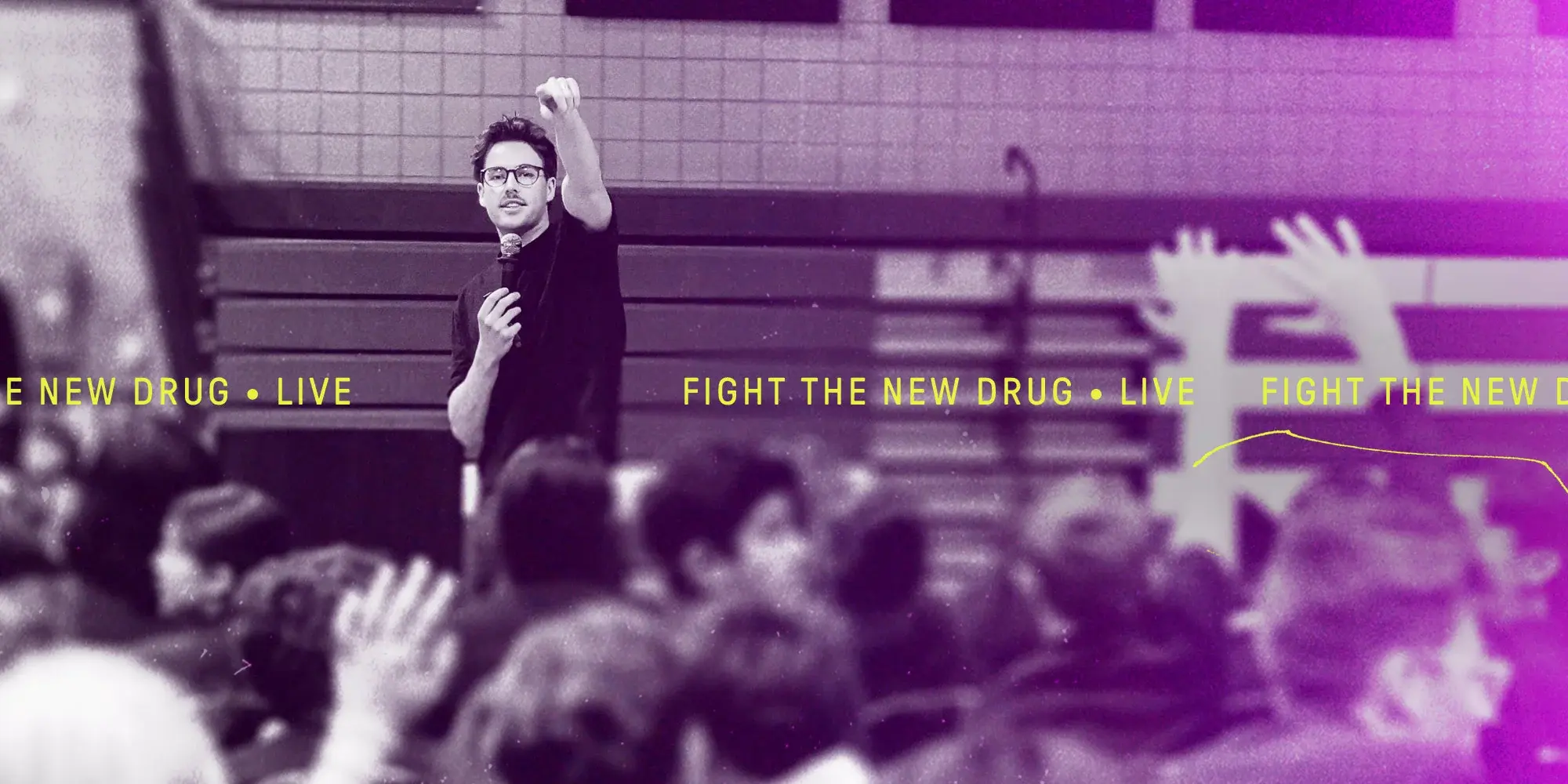
When I walked into the school that morning to deliver another Fight the New Drug Presentation, I could already feel it.
The room buzzed with nervous energy. A group of middle school boys sat front and center, joking loudly, nudging each other, laughing a little too hard—the kind of behavior you see when kids don’t know what to expect. I smiled to myself. I’ve learned to recognize that energy quickly.
Instead of shutting it down, I met them where they were.
I joked back. Made faces. Tried to get on their level. Slowly, almost without anyone noticing, the walls started to come down.
I wasn’t there to lecture them. I wasn’t there to shame anyone or talk at them. I was there to connect—to let them know that the difficult topic we were about to talk about didn’t have to be faced alone.
After the presentation ended, something unexpected happened.
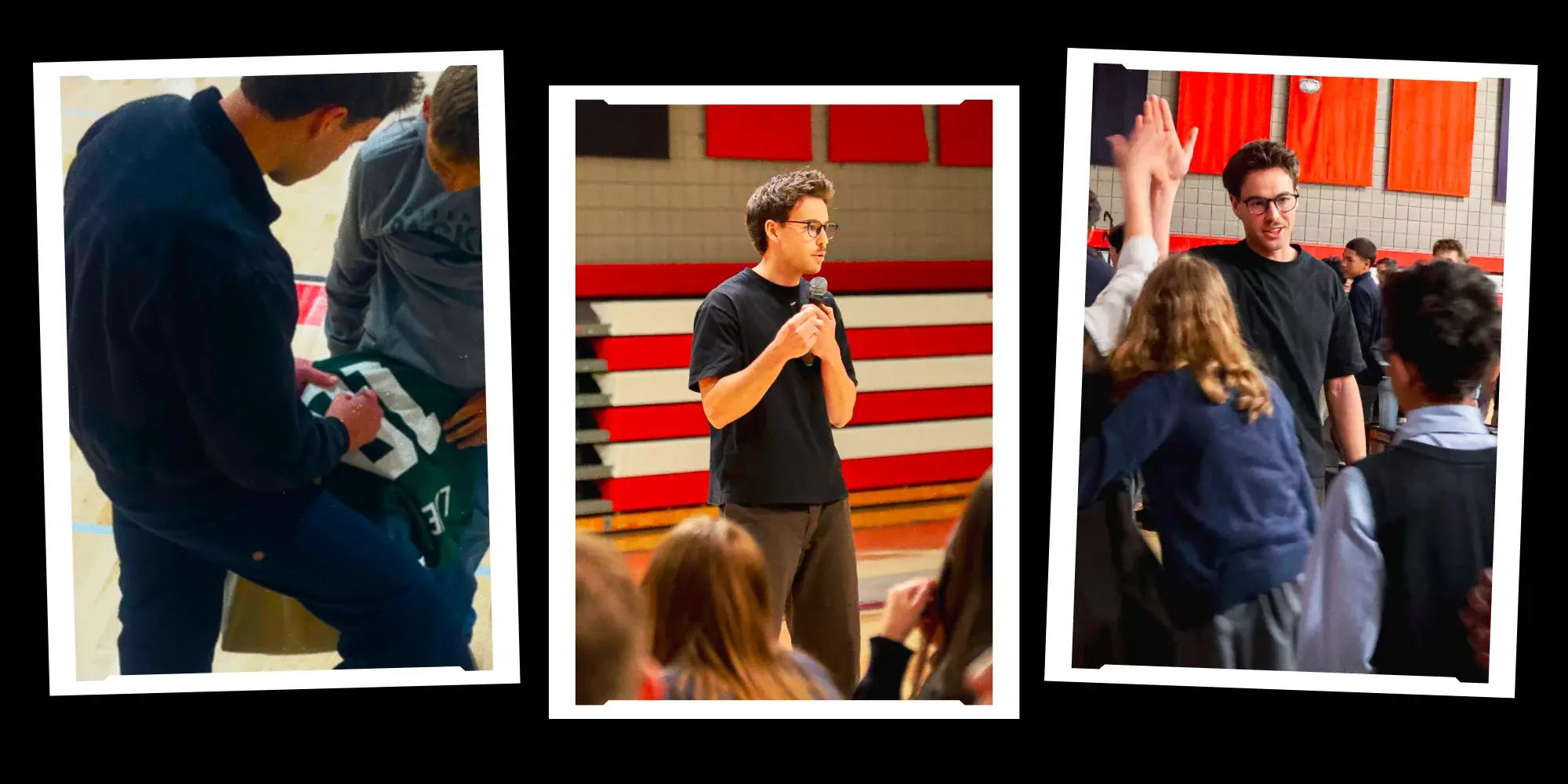
One of the boys—the loud one, the one wearing a Green Bay Packers jersey—walked up to me holding a Sharpie.
“Can you sign my jersey?”
I paused.
I’m not a celebrity or a professional athlete, I thought. Why in the world would he want my signature on that?
But he didn’t hesitate. He pulled the jersey over his head and held it out, pointing to the big white number on the back. So I signed it.
The look on his face caught me completely off guard.
And in that moment, it hit me—this wasn’t about an autograph.
It was about impact.
I get an opportunity to, in a way, be like a big brother to these kids, teaching them about the harmful effects of pornography.
What stuck with him wasn’t just the information I shared. It was the connection. It was feeling seen. It was having his experiences validated. It was knowing that someone cared enough to talk honestly with him about something that affects so many people, often in silence.
That jersey wasn’t a souvenir.
It was a reminder.
A reminder that connection changes people.
Why This Work Matters
This work is personal for me.
Pornography is something I’ve encountered and dealt with myself. For a long time, I didn’t have the language or the education to understand what was happening or why it felt so isolating. Like so many people, I thought I was alone.
What changed everything was education.
Reading articles, listening to podcasts, and learning through Fight the New Drug’s resources helped me see the bigger picture. I realized that this wasn’t just about individual choices—it wasn’t just a me thing, it was about how pornography affects our brains, our relationships, and our ability to connect.
And maybe most importantly, I realized I wasn’t alone.
That realization lit something inside me.
I remember thinking, If this education helped me, it could help someone else.
I wanted to be part of that.
So I stepped into the discomfort and became a Fight the New Drug presenter. I wanted to be the person I wish I’d had growing up—someone who could talk about this openly, without shame, and with real compassion.
Watching the Room Change
Almost every presentation starts the same way.
Students walk in skeptical. Parents arrive cautious. There’s tension in the room—nervous jokes, crossed arms, guarded expressions. You can almost feel people wondering, What is this going to be like?
Then we start talking.
As the presentation goes on, the energy shifts. The jokes fade. The room grows quiet. I’ll look around and see every set of eyes locked in. You can feel the weight of the topic—but not in a hopeless way. In a way that says, This matters.
By the end, it’s completely different.
Students line up for fist bumps. Some pull me aside and quietly say, ‘Thank you.’ Others tell me they’ve been affected by this for years and that hearing it talked about honestly gave them hope.
Parents stay after too.
They open up about how pornography has affected their relationships, their self-image, and their families. I hear the same thing again and again:
“This is the first time anyone has talked about this in a normal, healthy way.”
And every time, it reminds me why this work matters.
Schools Are Dealing With Porn Every Day
Before every presentation, I meet with administrators and counselors. They’re the ones who help set everything up—and they’re also the ones who see what students are really dealing with.
They talk to me about sextortion, sexting, revenge porn, and sexual harassment.
About pornography shaping expectations at younger and younger ages, about porn infiltrating their campus culture.
None of this shocks me anymore.
These aren’t rare problems. They’re happening everywhere.
What gives me hope is that schools are choosing to address these issues instead of ignoring them. Education helps students understand that harmful behaviors aren’t “normal” just because they’re common—and that they don’t have to face these challenges alone.
Education interrupts normalization.
Connection interrupts shame.
Making A Difference Through A Presentation
One of the moments that stuck with me most didn’t happen during a presentation.
Another presenter and I spent days in one small community, bouncing between sister schools and giving far more presentations than usual. By the end, it felt like we had gone to school there ourselves.
As we were getting ready to leave, the staff surprised us.
They handed us school sweatshirts.
It might seem like a small thing—but to me, it meant everything.
That sweatshirt symbolized belonging. It reminded me that I was no longer an outsider coming in to talk about a difficult topic. I was welcomed. Trusted. Treated like part of their community.
And that’s what this work is really about.
Not just sharing information—but building a village to help protect kids, individuals and communities from the harmful effects of pornography
Why I Show Up
Right now, I’m a full-time college student. I work multiple jobs. My schedule is full.
And still, this is my favorite thing I do.
Because people open up.
Friends. Friends of friends. Parents. Students.
After a presentation, students and parents alike come to me not because I have all the answers, but because hearing about pornography in a healthy way for the first time is powerful. They know this is a space where vulnerability is safe.
That’s the ripple effect of education on pornography.
When people learn the truth, they stop hiding.
When shame fades, healing becomes possible.
And sometimes, healing looks like a middle school kid holding onto a signed football jersey—not because of who signed it, but because of what it represents.
Hope.
Connection.
And the reminder that none of us are alone in this fight.
Book a youth presentation at your school
Help your students make educated decisions about pornography. Fight the New Drug’s age-appropriate and engaging presentations highlight research from respected academic institutions that demonstrates the significant impacts of porn consumption on individuals, relationships, and society.
We offer presentations customized for each audience, aligning with our mission as a non-religious and non-legislative organization educating with science, facts, and personal accounts. All of our tailored presentations, whether it’s a school, community, parent, or conference presentation, will provide attendees with comprehensive, age-relevant information about how porn impacts the brain, can harm relationships, affects society as well as how to have healthy conversations about porn, as well as some free resources for further education and recovery.
We empower your students to make educated decisions to better equip them to love themselves, have healthy relationships, and make a positive difference in the world.
What are you waiting for? Click here to learn more and book your middle school or high school presentation today.
Your Support Matters Now More Than Ever
Most kids today are exposed to porn by the age of 12. By the time they’re teenagers, 75% of boys and 70% of girls have already viewed itRobb, M.B., & Mann, S. (2023). Teens and pornography. San Francisco, CA: Common Sense.Copy —often before they’ve had a single healthy conversation about it.
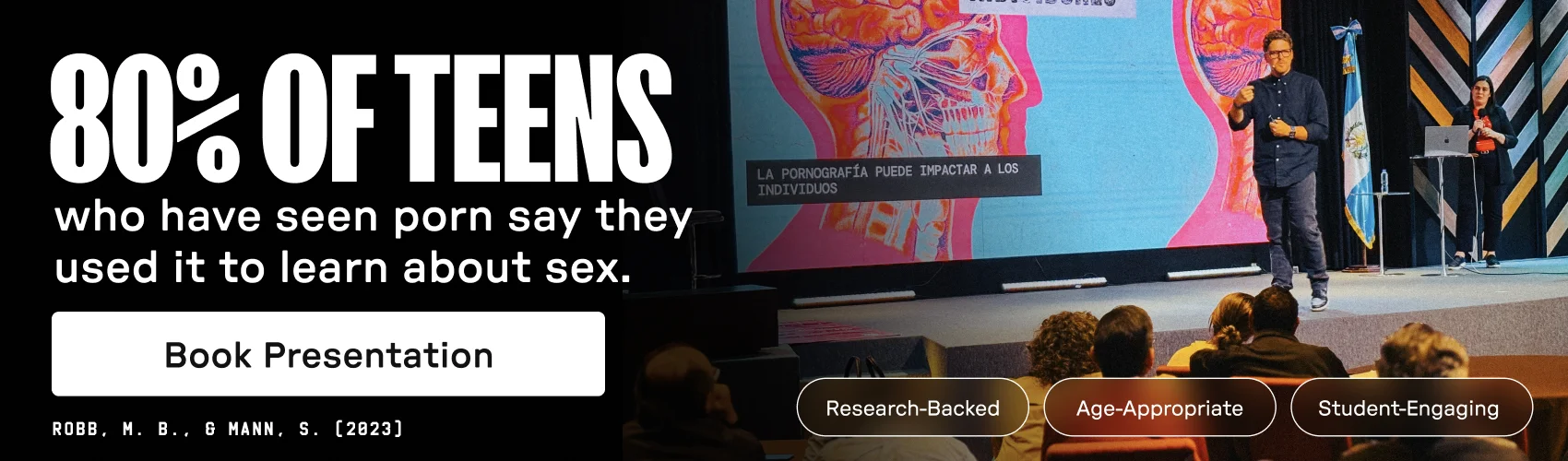
Even more concerning: over half of boys and nearly 40% of girls believe porn is a realistic depiction of sexMartellozzo, E., Monaghan, A., Adler, J. R., Davidson, J., Leyva, R., & Horvath, M. A. H. (2016). “I wasn’t sure it was normal to watch it”: A quantitative and qualitative examination of the impact of online pornography on the values, attitudes, beliefs and behaviours of children and young people. Middlesex University, NSPCC, & Office of the Children’s Commissioner.Copy . And among teens who have seen porn, more than 79% of teens use it to learn how to have sexRobb, M.B., & Mann, S. (2023). Teens and pornography. San Francisco, CA: Common Sense.Copy . That means millions of young people are getting sex ed from violent, degrading content, which becomes their baseline understanding of intimacy. Out of the most popular porn, 33%-88% of videos contain physical aggression and nonconsensual violence-related themesFritz, N., Malic, V., Paul, B., & Zhou, Y. (2020). A descriptive analysis of the types, targets, and relative frequency of aggression in mainstream pornography. Archives of Sexual Behavior, 49(8), 3041-3053. doi:10.1007/s10508-020-01773-0Copy Bridges et al., 2010, “Aggression and Sexual Behavior in Best-Selling Pornography Videos: A Content Analysis,” Violence Against Women.Copy .
From increasing rates of loneliness, depression, and self-doubt, to distorted views of sex, reduced relationship satisfaction, and riskier sexual behavior among teens, porn is impacting individuals, relationships, and society worldwideFight the New Drug. (2024, May). Get the Facts (Series of web articles). Fight the New Drug.Copy .
This is why Fight the New Drug exists—but we can’t do it without you.
Your donation directly fuels the creation of new educational resources, including our awareness-raising videos, podcasts, research-driven articles, engaging school presentations, and digital tools that reach youth where they are: online and in school. It equips individuals, parents, educators, and youth with trustworthy resources to start the conversation.
Will you join us? We’re grateful for whatever you can give—but a recurring donation makes the biggest difference. Every dollar directly supports our vital work, and every individual we reach decreases sexual exploitation. Let’s fight for real love: