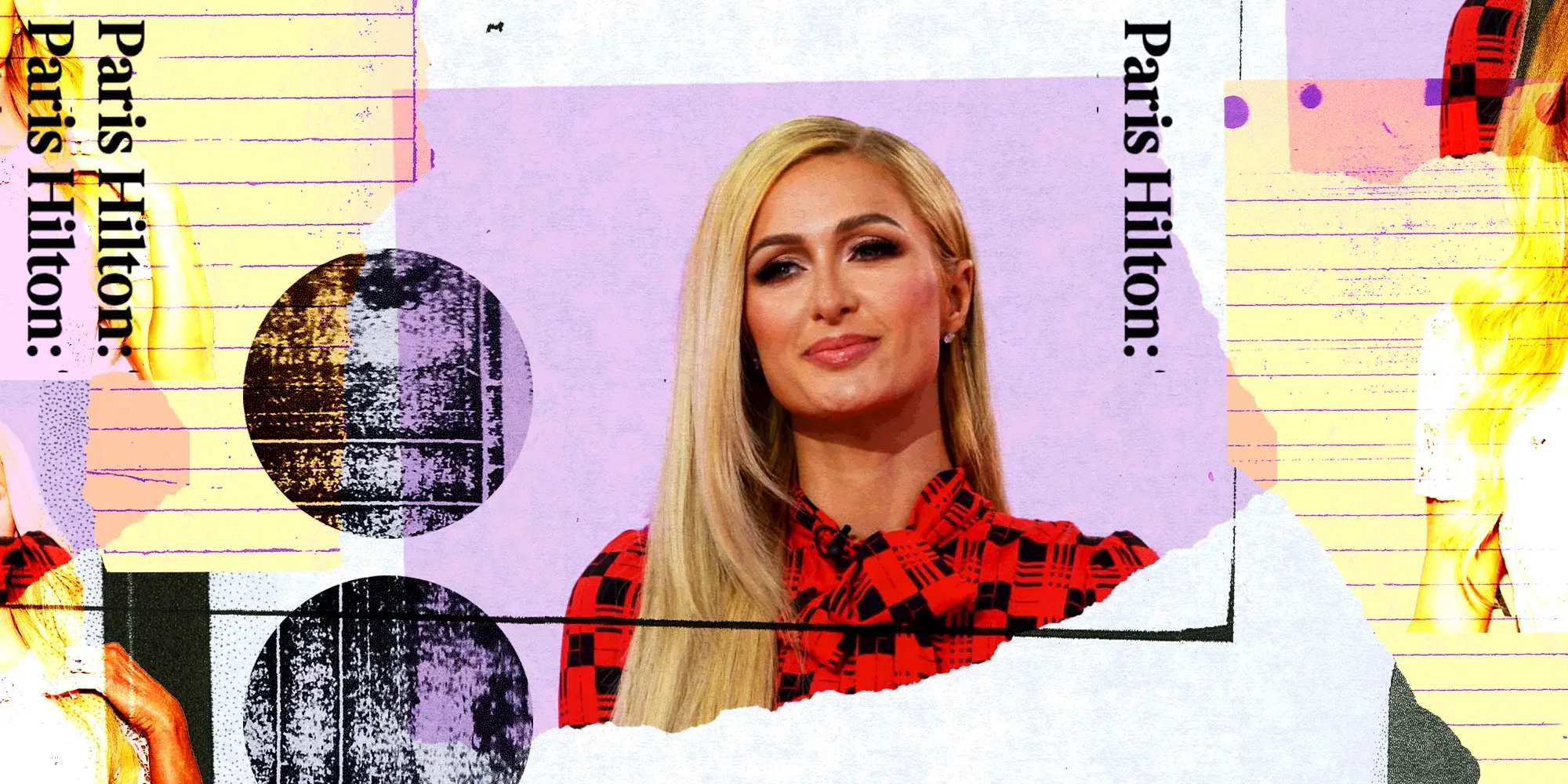
In a powerful, heart-wrenching revelation, Paris Hilton opened up about how her leaked sex tape — once widely viewed as “celebrity drama” — is now being seen for what it truly was: revenge porn.
“This tape was never meant for the world,” Paris said. “This was deeply private. And today I view it as revenge porn.” She went on to explain that she felt “violated” and “exposed,” and that speaking out now is her way of reclaiming her voice and advocating for others who have been hurt in similar ways.
In an interview with The Sunday Times, Paris discusses how the culture shift in recognizing revenge porn for what it is has aided in her healing.
“Like, that would be illegal today,” she says. “People realise just how wrong it was. And that has also been healing for me, for people to be, like, wow, Paris was just a teenage girl being taken advantage of by this older guy,” Paris says.
Her words serve as a sobering reminder that the non-consensual sharing of intimate content is not a form of entertainment. It is a violation — one that can reshape a person’s entire life.
What Revenge Porn Really Is — And Why It’s So Harmful
In 2004, Paris Hilton was 19, her then-boyfriend 35. Her boyfriend, Rick Salomon, nonconsensually shared a private, intimate video of them and sold it for profit.
“That was just so painful and humiliating,” Paris says.
Although both she and her boyfriend were in the video, Paris received the majority of the shame, hate, and abuse for what today would constitute as revenge porn and have legal implications.
Tabloids exploited her, music videos mocked her, and the world largely blamed her.
“To trust somebody and have them put something out in the world that no one was supposed to see… and then to have people judge me based on one night with someone I trusted… that’s something that will affect me for the rest of my life,” Paris said.

Revenge porn refers to the sharing of sexually explicit images or videos without consent. Sometimes the material is filmed consensually but shared as an act of humiliation or control. Other times, victims never consented to being filmed at all. In every scenario, the effects can be devastating.
Victims often describe feeling ashamed, terrified, or powerless. The violation is not only public, it is also deeply psychological.
The person whose image or video is shared loses control over their own body in a very real way. Trust in relationships can be shattered. Careers, family connections, and mental health can suffer. And for many, the exposure becomes an ongoing fear.
Even long after content is removed, the memory of its spread lingers. Survivors talk about constantly wondering who has seen the images, and how those people may judge or treat them.
Revenge porn is not an accident or a lapse in judgment; it is an act of power, coercion, or punishment. It is a form of sexual abuse.
Real Faces, Real Lives
Paris isn’t the only one to have survived revenge porn. Fellow survivor Georgia Harrison’s experience is one of the clearest examples of how image-based abuse affects a victim long after the initial act.
In 2020, Georgia’s former partner secretly recorded a sexual encounter and later uploaded the video online without her consent. She discovered not only that the footage had been distributed, but also that her ex-partner had profited from it.
Georgia later described the ordeal as “an utter violation,” explaining that even while pursuing justice, she was still haunted by the knowledge that the video continued to circulate.
The legal process was long and brutal. Her ex-partner was ultimately found guilty of voyeurism and disclosing private sexual images with the intent to cause distress. He served jail time, and in a separate civil case, Georgia was awarded record damages.
Even with these victories, she has spoken honestly about the emotional toll — saying that the trauma affects her self-worth, her ability to trust, and her sense of safety.
Georgia’s story is not an isolated one. Zara McDermott has publicly shared that she was a victim of revenge porn twice — once as a teen and again as an adult. She described spiraling into shame, depression, and confusion, and spoke about how victims often blame themselves despite having done nothing wrong.
Sadly, this issue spans across age, gender, race, and socio-economic backgrounds.
Image-based sexual abuse does not discriminate. The victims could be anyone — teens, partners in committed relationships, public figures, or private individuals. And the emotional impact can last for years.
How You Can Help Survivors
If someone confides in you that they’ve been a victim of revenge porn, one of the most important things you can do is believe them. Victims often enter the situation already carrying shame or fear that they will be judged. Listening without criticism can be an enormous relief.
It can also be helpful to calmly encourage them to record what has happened. Saving links, messages, and screenshots may feel painful, but these can be essential if they choose to pursue legal action or request that platforms remove the content. Many victims feel overwhelmed by the idea of filing reports or contacting websites, so offering to help them navigate those steps , if they want you to, can lessen the emotional load.
Supporting emotional recovery is equally important. Encouraging the person to seek professional counseling or a support group can help them address trauma, anxiety, or isolation.
Knowing that they are not alone, and that others have survived similar experiences, can be incredibly healing.
If the victim ever decides they want to share their story, you can help. Speaking out publicly is not right for every survivor, but when consented to, it can be empowering and can help shift public conversations away from victim-blaming narratives.
Finally, you can choose to actively challenge unhealthy cultural norms — objectification, gossip sharing, or the trivialization of sexual boundaries.
Advocating for survivors, pressuring platforms to enforce takedown policies, and engaging in honest conversations about consent and the harmful effects of pornography can all contribute to creating a safer environment for future victims.
Why This Conversation Matters
Reframing Paris Hilton’s leaked tape as revenge porn is a crucial shift.
It calls out the abuse for what it was and highlights how society has too often normalized the exploitation of women’s bodies, especially in the digital era. The same is true for the countless unnamed victims who endure the trauma of having their intimate lives made public against their will.
When we stop viewing these situations as “scandals” and start seeing them as violations, we help dismantle the stigma that keeps victims silent. We recognize that consent is the dividing line between intimacy and abuse — and that everyone deserves to feel safe within their own life.
For victims, healing is possible. There are legal protections, emotional support systems, and communities ready to help. And for the rest of us, there is a responsibility to stand with survivors, challenge harmful behaviors, and fight for a culture where consent is truly respected.
If you’ve been a victim of revenge porn or image-based sexual abuse, here are resources that may help.
Your Support Matters Now More Than Ever
Most kids today are exposed to porn by the age of 12. By the time they’re teenagers, 75% of boys and 70% of girls have already viewed itRobb, M.B., & Mann, S. (2023). Teens and pornography. San Francisco, CA: Common Sense.Copy —often before they’ve had a single healthy conversation about it.
Even more concerning: over half of boys and nearly 40% of girls believe porn is a realistic depiction of sexMartellozzo, E., Monaghan, A., Adler, J. R., Davidson, J., Leyva, R., & Horvath, M. A. H. (2016). “I wasn’t sure it was normal to watch it”: A quantitative and qualitative examination of the impact of online pornography on the values, attitudes, beliefs and behaviours of children and young people. Middlesex University, NSPCC, & Office of the Children’s Commissioner.Copy . And among teens who have seen porn, more than 79% of teens use it to learn how to have sexRobb, M.B., & Mann, S. (2023). Teens and pornography. San Francisco, CA: Common Sense.Copy . That means millions of young people are getting sex ed from violent, degrading content, which becomes their baseline understanding of intimacy. Out of the most popular porn, 33%-88% of videos contain physical aggression and nonconsensual violence-related themesFritz, N., Malic, V., Paul, B., & Zhou, Y. (2020). A descriptive analysis of the types, targets, and relative frequency of aggression in mainstream pornography. Archives of Sexual Behavior, 49(8), 3041-3053. doi:10.1007/s10508-020-01773-0Copy Bridges et al., 2010, “Aggression and Sexual Behavior in Best-Selling Pornography Videos: A Content Analysis,” Violence Against Women.Copy .
From increasing rates of loneliness, depression, and self-doubt, to distorted views of sex, reduced relationship satisfaction, and riskier sexual behavior among teens, porn is impacting individuals, relationships, and society worldwideFight the New Drug. (2024, May). Get the Facts (Series of web articles). Fight the New Drug.Copy .
This is why Fight the New Drug exists—but we can’t do it without you.
Your donation directly fuels the creation of new educational resources, including our awareness-raising videos, podcasts, research-driven articles, engaging school presentations, and digital tools that reach youth where they are: online and in school. It equips individuals, parents, educators, and youth with trustworthy resources to start the conversation.
Will you join us? We’re grateful for whatever you can give—but a recurring donation makes the biggest difference. Every dollar directly supports our vital work, and every individual we reach decreases sexual exploitation. Let’s fight for real love: