A subscriber opens OnlyFans and sees a message from a creator he follows.
She remembers his name. She asks how his day went. She responds to something personal he shared earlier. Maybe she uses a pet name or makes him feel as though their conversations are becoming more personal. As the messages continue, he may begin to believe he is purchasing more than sexually explicit content. He may believe he is building a genuine connection with the woman on the other side of the screen.
But she may not be on the other side of the screen at all.
The person responding could be a stranger, a man whose job is to impersonate the creator, manage several conversations, remember subscriber details, and turn emotional engagement into spending.
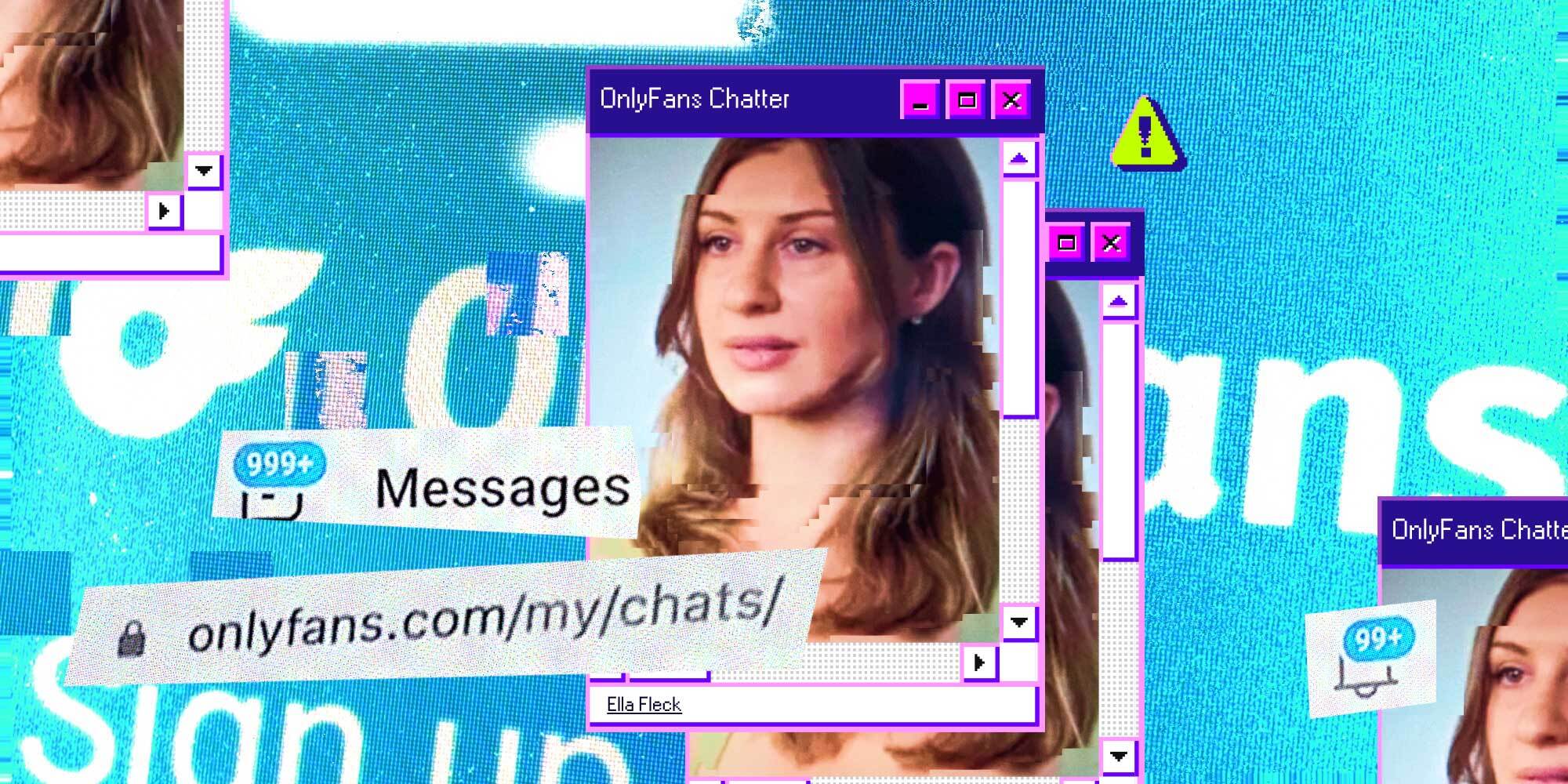
Artist and writer Ella Fleck recently went undercover to investigate this hidden part of the OnlyFans economy. In an August 2026 British GQ investigation, Fleck described spending six weeks inside the training process for an OnlyFans “chatter” agency while using the fictional male persona “Elliot.” According to Fleck, the training included learning creators’ personal details, practicing sales conversations, studying subscriber information, and learning how to impersonate creators convincingly while keeping subscribers emotionally engaged and spending.Salfiti, Z. (2026, August 19). This artist spent six weeks undercover as a male OnlyFans chatter. British GQ. https://www.gq-magazine.co.uk/article/undercover-male-onlyfans-chatter-ella-fleckCopy
What Fleck encountered raises serious questions about a platform whose appeal may include direct access, personalization, and a sense of connection. Because when sexually explicit content is combined with manufactured intimacy, the fantasy being sold may not stop with what appears on the screen.
The relationship itself can become part of the product.
The OnlyFans Chatters Impersonating Creators
For subscribers who use OnlyFans for sexually explicit content, aka porn, one major part of the platform’s appeal is interaction. The pornography feels more personal because you’re having “direct” interactions with the creator. Or at least you think you do…
A subscriber may be able to send private messages, purchase custom content, make requests, and receive responses that appear to come directly from the creator whose profile they follow. That can make the experience feel unusually personal. But Fleck’s investigation illustrates how complicated that apparent connection can become.
During her six-week undercover experience, she said trainees were taught to communicate on behalf of creators, memorize details about their personalities, respond in ways consistent with their identities, take notes on subscribers, and remain in character. Fleck also described observing chatters handle conversations while other trainees watched and learned how to maintain the impersonation. You think you’re chatting with a creator when you’re really talking to a random man while 12 others watch and study your conversation. Doesn’t sound too personal anymore, does it?
In other words, a subscriber who believes he is having an ongoing conversation with one particular woman may actually be interacting with an employee whose job is to sound like her. The photographs may belong to the creator. The personality in the messages may be carefully reproduced. And the person typing may be someone else entirely.
Fleck said the people in her training cohort were men, despite the fact that the creators they were learning to impersonate were women. She described one creator who had believed an agency managing her messages was staffed by women, only to later discover that the people doing the chatting were men in Leeds.
That distinction matters because the subscriber may not simply be purchasing a photograph or video whose commercial nature is obvious. He may be spending money because he believes a specific person is responding to him, remembering him, flirting with him, or taking a personal interest in his life. The illusion of a relationship can become part of what makes the transaction profitable.
The Product Isn’t Just Porn. It’s the Feeling of Being Wanted.
Fleck said one of the central lessons in the agency’s training was that chatters were not supposed to simply have casual conversations. They were supposed to create emotional engagement that resulted in spending.
According to her account, trainees studied sales techniques, customer psychology, ways to tease or withdraw attention, methods for remembering subscriber details, and strategies for validating people based on what they appeared to want from the conversation. That can turn ordinary human vulnerability into commercially useful information.
A subscriber talks about his job. His family.His insecurities. His ambitions.Something difficult happening in his life.
A chatter can remember those details and use them later to make the interaction feel continuous and personal. And this appears to extend beyond a single agency.
A March 2026 investigation by The Times, drawing partly on information exposed through a UK High Court case, described chatter agencies maintaining detailed subscriber notes that could include biographical information, salary or payday information, tipping history, location, and sexual preferences. According to the reporting, those notes can allow different workers to continue the same apparent relationship when another chatter takes over the conversation.The Times. (2026, March 19). ‘I’m milking human loneliness.’ The secret world of OnlyFans ‘chatters’. https://www.thetimes.com/uk/law/article/onlyfans-chatter-agencies-high-court-infinni-hv6gkhzwtCopy
One chatter interviewed by The Times described herself as part of a system “milking human loneliness.”
That phrase captures what makes this business model worth examining. A vulnerable disclosure can become data. Affection can become a sales strategy. Remembering someone’s life can become a customer-retention technique. And the feeling of being noticed can become something that can be purchased.
It’s no surprise that OnlyFans is so profitable. So many people turn to porn when they’re feeling lonely, disconnected, depressed, isolated, and alone. They use porn to cope, to provide an artificial connection, and OnlyFans takes this to the next level.
OnlyFans “Authenticity” Can Be Carefully Manufactured
Not every OnlyFans creator uses chatters, and not every subscriber necessarily assumes every message is personally written by a creator. But Fleck’s investigation and The Times reporting both demonstrate that creator impersonation does occur—and that subscribers may not always know when the person speaking to them has changed.
If a subscriber purchases a video, the transaction is relatively clear. But when a subscriber pays after receiving a personalized message, emotional reassurance, flirtation, or apparent affection from a specific creator, the perceived identity of the sender may be central to why he spends.
The product is no longer just porn. It may also include the belief that a particular person sees him, remembers him, wants to hear from him, or cares whether he returns. That is where personalization can become deception. And the exploitation can go both ways. Consumers can exploit creators by purchasing and consuming their pornography in ways that objectify and reduce them to sexual commodities, while creators and agencies can exploit fans through deception and manufactured intimacy.
Parasocial Attachment Can Feel Real—Even When the Relationship Is Not
Researchers use the terms parasocial interaction and parasocial relationship to describe forms of one-sided connection people can develop with media figures, celebrities, influencers, and online personalities.
A 2026 systematic review examined 76 peer-reviewed studies on parasocial interactions and relationships with online influencers. The researchers found that characteristics of the influencer, the message, the consumer, and the medium itself can help shape these attachments. They specifically highlighted social-media affordances such as interactivity, community, media richness, and gifting as potentially important features in the development of parasocial experiences.Aw, E. C.-X., Fernando, A. G., Balakrishnan, S., Palaniappan, U., & Booshnam, D. (2026). Consumers’ parasocial interactions and relationships with online influencers: A systematic review. Journal of Consumer Marketing, 43(5), 653–674. https://doi.org/10.1108/JCM-02-2024-6611Copy
The review also found that some studies have examined transactional outcomes associated with parasocial relationships, including purchasing, impulse buying, and gifting. The authors cautioned that relatively few studies have examined these transactional outcomes, so this area still needs more research.
OnlyFans can add a particularly powerful layer to this dynamic because communication can appear reciprocal. The creator does not simply post content, “She” responds.
The subscriber may experience real anticipation when a message appears; he’s already engaged with her content. He may feel real affection, jealousy, comfort, desire, rejection, or excitement. Those emotions do not become fake simply because the relationship behind them is commercial.
And that may be precisely what makes manufactured intimacy like porn so powerful: the subscriber’s feelings can be genuine even when the person apparently reciprocating them is playing a role.
Personalized Porn Is Still Porn
For consumers using OnlyFans for sexually explicit material, personalization does not remove the questions researchers have raised about pornography and relational well-being.
A 2024 study involving 706 cohabiting couples—1,368 participants in total—examined pornography use across video, picture, written, and audio formats. Participants completed online self-report questionnaires, and researchers used actor-partner interdependence models to examine associations with both a participant’s satisfaction and their partner’s satisfaction. Nolin, M.-C., Bőthe, B., Villeneuve, E., & Vaillancourt-Morel, M.-P. (2024). Associations between pornography use through different media and sexual and relationship satisfaction among cohabiting couples. Archives of Sexual Behavior, 53(9), 3405–3417. https://doi.org/10.1007/s10508-024-02899-1Copy
The results differed by medium. Video pornography use was associated with lower sexual and relationship satisfaction for users and with lower sexual satisfaction for their partners. Picture use was associated with lower relationship satisfaction and partners’ lower sexual satisfaction, and written pornography use was associated with lower sexual satisfaction.Nolin, M.-C., Bőthe, B., Villeneuve, E., & Vaillancourt-Morel, M.-P. (2024). Associations between pornography use through different media and sexual and relationship satisfaction among cohabiting couples. Archives of Sexual Behavior, 53(9), 3405–3417. https://doi.org/10.1007/s10508-024-02899-1Copy
This study challenges the assumption that making pornography more interactive, customized, or personal automatically makes it relationally neutral. OnlyFans may introduce additional questions because subscribers can purchase not only sexual content but also personalized communication.
Fake Intimacy Cannot Satisfy a Real Need for Connection
Wanting to feel known, wanted, valued, or connected is deeply human. Loneliness is not something to be ashamed of.
But porn and commercial attention can imitate some of the signals of intimacy without offering the mutual care and commitment that make genuine relationships secure. Broader pornography research gives another reason to take that distinction seriously.
A study of 1,247 participants found significant positive associations between pornography use and loneliness. The researchers tested models in both directions and argued that their findings warranted further investigation into a potentially reciprocal relationship between pornography use and loneliness. Butler, M. H., Pereyra, S. A., Draper, T. W., Leonhardt, N. D., & Skinner, K. B. (2018). Pornography use and loneliness: A bidirectional recursive model and pilot investigation. Journal of Sex & Marital Therapy, 44(2), 127–137. https://doi.org/10.1080/0092623X.2017.1321601Copy
That study was about pornography generally, not OnlyFans specifically, but when that research is considered alongside an OnlyFans business model capable of selling sexual stimulation and simulated personal attention at the same time, an important question emerges: What happens when someone seeking connection is repeatedly offered a counterfeit imitation of it?

This Is What Happens When Connection Becomes a Commodity
Fleck’s undercover experience reveals something larger than an unusual job inside the creator economy. It shows how easily the language and behaviors associated with intimacy can be converted into sales tools. A subscriber may believe he is paying for a creator’s attention. The creator may have outsourced that attention to an agency. The agency may assign the conversation to an employee whose job is to impersonate her. Another employee may take over later, using notes from the first conversation. And personal information disclosed in moments of apparent closeness may help determine how the next sales pitch is delivered.
British GQ’s reporting on Fleck’s investigation and The Times reporting on chatter agencies document variations of exactly these practices.
Everyone involved is a real person. But the relationship being performed may be carefully engineered. The creator becomes a brand. The chatter performs a character. The subscriber can become a set of preferences, vulnerabilities, and spending patterns. And intimacy becomes part of the sales funnel.
That does not mean every creator behaves deceptively, every agency operates the same way, or every subscriber misunderstands the transaction. It does mean consumers should be skeptical of the assumption that personalized sexual content equals authentic connection.
Because genuine intimacy depends on more than attention. It requires honesty. Mutuality. Consent. Vulnerability that moves in both directions. Care that does not disappear when a payment does. People searching for connection deserve relationships in which they are known as human beings, not primarily as customers.
And no matter how convincing a commercial imitation of connection becomes, the human need beneath it still asks for something real.
Your Support Matters Now More Than Ever
Most kids today are exposed to porn by the age of 12. By the time they’re teenagers, 75% of boys and 70% of girls have already viewed itRobb, M.B., & Mann, S. (2023). Teens and pornography. San Francisco, CA: Common Sense.Copy —often before they’ve had a single healthy conversation about it.
Even more concerning: over half of boys and nearly 40% of girls believe porn is a realistic depiction of sexMartellozzo, E., Monaghan, A., Adler, J. R., Davidson, J., Leyva, R., & Horvath, M. A. H. (2016). “I wasn’t sure it was normal to watch it”: A quantitative and qualitative examination of the impact of online pornography on the values, attitudes, beliefs and behaviours of children and young people. Middlesex University, NSPCC, & Office of the Children’s Commissioner.Copy . And among teens who have seen porn, more than 79% of teens use it to learn how to have sexRobb, M.B., & Mann, S. (2023). Teens and pornography. San Francisco, CA: Common Sense.Copy . That means millions of young people are getting sex ed from violent, degrading content, which becomes their baseline understanding of intimacy. Out of the most popular porn, 33%-88% of videos contain physical aggression and nonconsensual violence-related themesFritz, N., Malic, V., Paul, B., & Zhou, Y. (2020). A descriptive analysis of the types, targets, and relative frequency of aggression in mainstream pornography. Archives of Sexual Behavior, 49(8), 3041-3053. doi:10.1007/s10508-020-01773-0Copy Bridges et al., 2010, “Aggression and Sexual Behavior in Best-Selling Pornography Videos: A Content Analysis,” Violence Against Women.Copy .
From increasing rates of loneliness, depression, and self-doubt, to distorted views of sex, reduced relationship satisfaction, and riskier sexual behavior among teens, porn is impacting individuals, relationships, and society worldwideFight the New Drug. (2024, May). Get the Facts (Series of web articles). Fight the New Drug.Copy .
This is why Fight the New Drug exists—but we can’t do it without you.
Your donation directly fuels the creation of new educational resources, including our awareness-raising videos, podcasts, research-driven articles, engaging school presentations, and digital tools that reach youth where they are: online and in school. It equips individuals, parents, educators, and youth with trustworthy resources to start the conversation.
Will you join us? We’re grateful for whatever you can give—but a recurring donation makes the biggest difference. Every dollar directly supports our vital work, and every individual we reach decreases sexual exploitation. Let’s fight for real love: