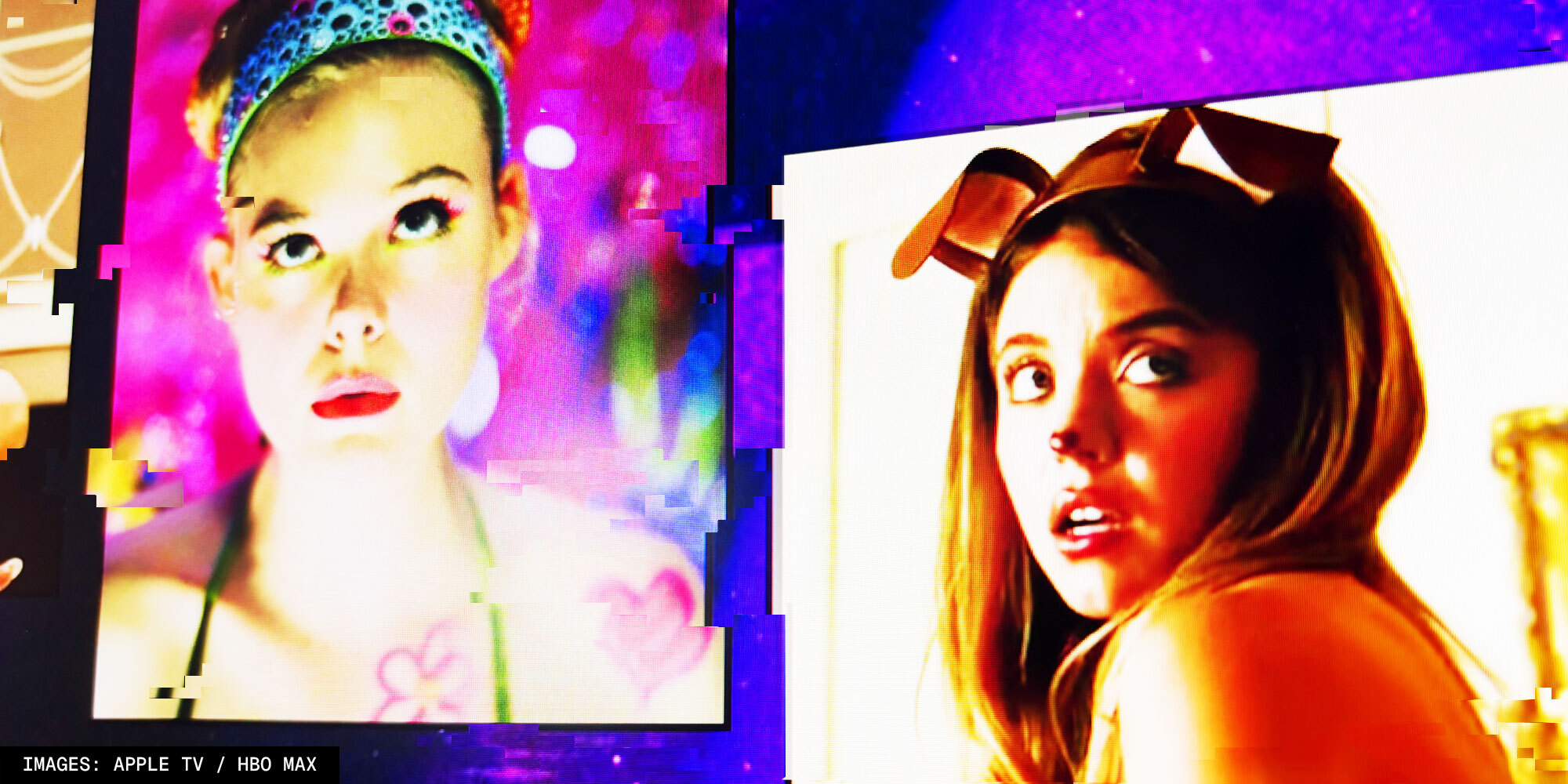
In HBO’s Euphoria, Cassie Howard spirals through validation-seeking behavior while her hypersexualized image becomes central to her identity. In Margo’s Got Money Troubles, a struggling young mom turns to OnlyFans as a financially empowering lifeline. Across television and social media, platforms like OnlyFans are increasingly framed as edgy, liberating, entrepreneurial, or even just another ordinary career path.
And that’s exactly the problem.
What once existed mostly on the fringes of internet culture is now being woven directly into mainstream entertainment narratives. TV writers, influencers, celebrities, and TikTok creators increasingly portray subscription-based sexual content platforms as empowering shortcuts to financial freedom, self-expression, or confidence. But while these portrayals often focus on glamour, control, or “taking ownership,” they rarely confront the emotional, psychological, relational, and long-term realities many creators face behind the scenes.
The normalization of platforms like OnlyFans doesn’t just change entertainment—it changes cultural expectations around intimacy, sexuality, and self-worth.
How TV Is Rebranding Online Sexual Content
Recent shows have begun exploring what BBC Culture called “the OnlyFans age,” where online sexual content creation is treated as a recognizable—and increasingly normalized—part of modern life.Mangan, L. (2026, April 29). The TV shows grappling with the OnlyFans age. BBC Culture. https://www.bbc.com/culture/article/20260429-the-tv-shows-grappling-with-the-onlyfans-ageCopy Rather than depicting pornography-adjacent work as exploitative or risky, many modern narratives frame it as empowering, practical, or even aspirational.
In Margo’s Got Money Troubles, the protagonist uses OnlyFans to escape financial instability and regain agency over her life. The story presents the platform with nuance, but still largely centers themes of empowerment and survival, with (spoiler) Margo choosing to stay on the platform even after a custody dispute. Similarly, Euphoria consistently blurs the line between empowerment and exploitation while heavily aestheticizing hypersexuality. Cassie’s increasingly explicit online persona becomes less of a warning sign and more of a stylized form of emotional expression, culminating in her work on OnlyFans, leading her to a major cinema role.
This trend reflects a broader cultural shift: online sexual content is no longer portrayed as taboo—it’s being portrayed as normal. But “normal” doesn’t mean harmless. But even OnlyFans creators have a problem with some of how their work is portrayed on the big screen.
The Reality Behind the Screen
OnlyFans is often marketed as a safer, more empowering alternative to traditional pornography because creators maintain more control over their content and income. But this framing ignores the significant emotional and psychological costs many performers report experiencing.
The reality is that selling sexual content online can create intense pressure to constantly escalate content, maintain subscriber attention, and blur personal boundaries. Many creators report experiencing burnout, anxiety, harassment, stalking, emotional exhaustion, and difficulty separating their identity from their online persona.
And unlike what’s often portrayed on television, financial success on OnlyFans is far from guaranteed. While a handful of creators make headlines for earning millions, the vast majority earn far less than the public assumes. Yet glamorous success stories, like landing a major acting role, dominate social media discourse, creating unrealistic expectations about money, empowerment, and control.
Television rarely shows the long-term consequences either:
- The permanence of explicit content online,
- the impact on future relationships or employment,
- emotional dissociation,
- exploitation by subscribers or managers,
- or the psychological toll of turning intimacy into a commodity.
Instead, viewers are often given a polished narrative that frames online sexual content creation as edgy self-empowerment rather than a system built on commodifying the body.
When Hypersexuality Gets Mistaken for Empowerment
One of the most concerning aspects of this cultural shift is how quickly hypersexuality is being reframed as confidence or liberation—especially for young women.
Critics of Euphoria have argued that the show’s sexualized portrayal of characters like Cassie often undermines its supposed critique of objectification. Some viewers felt the series presented “disempowering” sexualization while still packaging it in visually glamorous ways.Jones, A. (2026). Euphoria viewers call Cassie’s porn storyline ‘disempowering’. Indy100. https://www.indy100.com/tv/euphoria-cassie-porn-disempowering-2676875863Copy
That contradiction matters.
Because even when shows intend to critique exploitation, repeated exposure to aestheticized sexual content can still normalize it. Audiences—especially teens and young adults—may absorb the imagery more powerfully than the cautionary message.
And when celebrities and influencers openly discuss joining OnlyFans or joke about creating accounts, it further blurs the line between empowerment and self-objectification. According to The Independent, Sydney Sweeney recently addressed speculation surrounding explicit content and OnlyFans culture connected to her Euphoria role, highlighting how deeply intertwined these conversations have become in pop culture.Smith, J. (2026). Sydney Sweeney responds to OnlyFans speculation connected to Euphoria. The Independent. https://www.independent.co.uk/arts-entertainment/tv/news/euphoria-onlyfans-sydney-sweeney-dog-b2974484.htmlCopy
The result? A generation increasingly taught that visibility equals value—and that sexual attention is empowering by default.
The Dark Side of OnlyFans
One of the clearest examples of this normalization appears in Euphoria’s newest OnlyFans storyline involving Cassie Howard. What makes the storyline especially concerning isn’t just that Cassie joins the platform as a way to fund her lavish lifestyle—it’s how the show frames increasingly extreme and exploitative content as edgy entertainment.
At one point, Cassie claims “OnlyFans isn’t porn,” despite the fact that her account revolves around sexually explicit performances and fetishized roleplay. The distinction matters because it reflects a broader cultural attempt to rebrand pornographic content as simply “content creation” or empowerment, softening the reality of what’s actually being sold, porn.
And what even OnlyFans creators have found disturbing is when Cassie dresses like a baby complete with pigtails, pacifiers, and infantilized behavior. Critics, including real OnlyFans creators, have pointed out that this kind of imagery dangerously overlaps with themes tied to child exploitation fantasies and would likely violate actual OnlyFans guidelines.Entertainment Weekly. (2026). Maitland Ward slams Sydney Sweeney’s “baby” OnlyFans content in Euphoria. https://ew.com/maitland-ward-slams-sydney-sweeney-baby-onlyfans-content-euphoria-11975424Copy
The storyline also depicts Cassie dressing and behaving like a dog while increasingly performing whatever subscribers request, reinforcing the message that financial success online comes from constantly pushing boundaries and becoming whoever the audience wants you to be. Some OnlyFans creators say the performance makes them seem like all creators are willing to do anything for money when that’s not in fact the case, while others say the pressure to meet subscribers’ requests has led them to burnout and regret in answering their demands.
These portrayals don’t just depict online sexual content creation—they normalize escalating fetish content, humiliation, and audience-driven self-objectification as ordinary entertainment. The more Cassie seeks validation and income, the more she appears willing to erase personal boundaries entirely in exchange for subscriber approval.
Even more troubling is that these scenes are heavily stylized and aestheticized. The show packages degrading or exploitative dynamics in visually glamorous ways, making it easy for audiences to absorb the imagery without critically examining the implications.
Some real OnlyFans creators themselves criticized the storyline for exactly this reason. Former Disney actress and current OnlyFans creator Maitland Ward called the infantilized scenes “disgusting and vile,” arguing that the portrayal crosses ethical lines and inaccurately represents how many creators actually operate online.
But whether or not the show accurately portrays the platform misses the larger cultural issue: millions of viewers are still consuming these narratives as entertainment. And repeated exposure matters.
When popular shows repeatedly frame sexual commodification as empowering, humorous, entrepreneurial, or normal, audiences become increasingly desensitized to the real harms associated with it. Behaviors that once would have raised immediate concern are reframed as confidence, hustle, or self-expression.
And in a digital culture already struggling with rising levels of loneliness, objectification, and porn consumption, mainstream entertainment continuing to glamorize platforms like OnlyFans may be contributing to a much deeper problem than Hollywood is willing to admit
The Bigger Cultural Cost
The normalization of platforms like OnlyFans doesn’t happen in isolation. It shapes how society views intimacy, relationships, and human worth.
When sexual content becomes increasingly commodified and mainstreamed, intimacy becomes transactional, validation becomes performance-based, and people begin learning to view themselves through the lens of audience consumption.
This especially impacts young people growing up in a digital culture where “content creation” is increasingly tied to identity and self-esteem.
The danger isn’t just that explicit platforms exist. The danger is that culture increasingly presents them as consequence-free empowerment while minimizing the risks and emotional realities involved.
Because when entertainment repeatedly tells viewers that selling sexual content online is a financial solution, that it’s glamorous, empowering, or ordinary, it subtly reshapes expectations around sexuality itself. And those messages don’t stay on TV screens.
We Deserve Better Conversations
This conversation isn’t about shaming people who use or perform on platforms like OnlyFans. Many individuals turn to these platforms because of financial hardship, social pressures, or limited opportunities. Their humanity deserves compassion—not judgment.
But compassion also means honesty.
And honesty means recognizing that a culture increasingly normalizing sexual commodification may carry deeper consequences than pop culture is willing to admit.
We deserve conversations that go beyond aesthetics and empowerment slogans. Because the more these platforms are woven into mainstream culture without serious critique, the easier it becomes to mistake exploitation for empowerment.
Your Support Matters Now More Than Ever
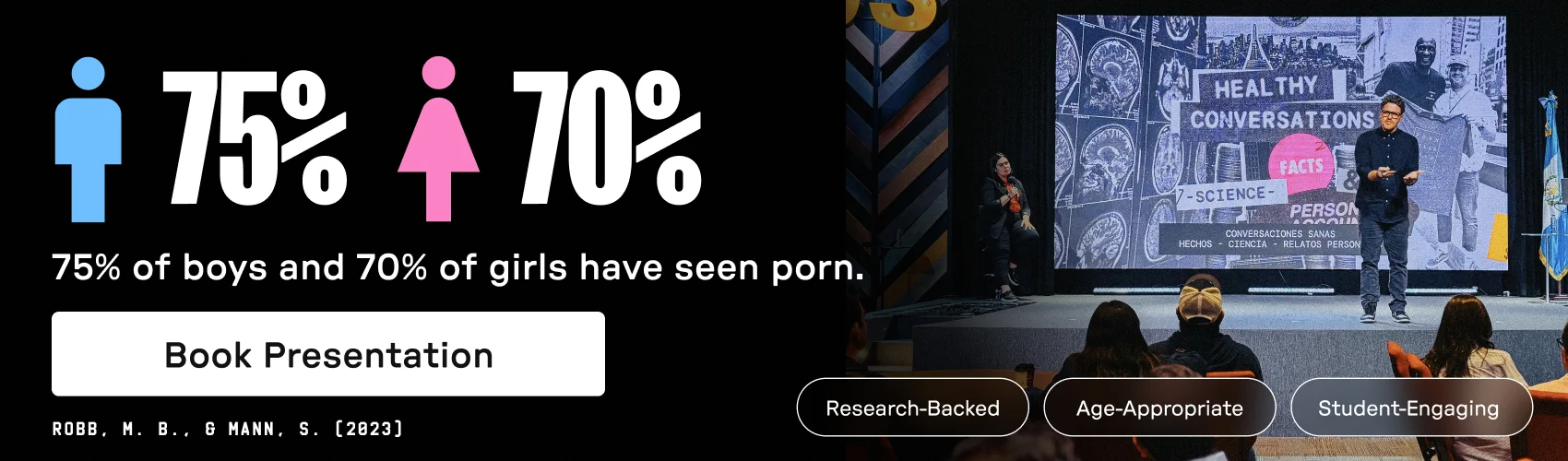
Most kids today are exposed to porn by the age of 12. By the time they’re teenagers, 75% of boys and 70% of girls have already viewed itRobb, M.B., & Mann, S. (2023). Teens and pornography. San Francisco, CA: Common Sense.Copy —often before they’ve had a single healthy conversation about it.
Even more concerning: over half of boys and nearly 40% of girls believe porn is a realistic depiction of sexMartellozzo, E., Monaghan, A., Adler, J. R., Davidson, J., Leyva, R., & Horvath, M. A. H. (2016). “I wasn’t sure it was normal to watch it”: A quantitative and qualitative examination of the impact of online pornography on the values, attitudes, beliefs and behaviours of children and young people. Middlesex University, NSPCC, & Office of the Children’s Commissioner.Copy . And among teens who have seen porn, more than 79% of teens use it to learn how to have sexRobb, M.B., & Mann, S. (2023). Teens and pornography. San Francisco, CA: Common Sense.Copy . That means millions of young people are getting sex ed from violent, degrading content, which becomes their baseline understanding of intimacy. Out of the most popular porn, 33%-88% of videos contain physical aggression and nonconsensual violence-related themesFritz, N., Malic, V., Paul, B., & Zhou, Y. (2020). A descriptive analysis of the types, targets, and relative frequency of aggression in mainstream pornography. Archives of Sexual Behavior, 49(8), 3041-3053. doi:10.1007/s10508-020-01773-0Copy Bridges et al., 2010, “Aggression and Sexual Behavior in Best-Selling Pornography Videos: A Content Analysis,” Violence Against Women.Copy .
From increasing rates of loneliness, depression, and self-doubt, to distorted views of sex, reduced relationship satisfaction, and riskier sexual behavior among teens, porn is impacting individuals, relationships, and society worldwideFight the New Drug. (2024, May). Get the Facts (Series of web articles). Fight the New Drug.Copy .
This is why Fight the New Drug exists—but we can’t do it without you.
Your donation directly fuels the creation of new educational resources, including our awareness-raising videos, podcasts, research-driven articles, engaging school presentations, and digital tools that reach youth where they are: online and in school. It equips individuals, parents, educators, and youth with trustworthy resources to start the conversation.
Will you join us? We’re grateful for whatever you can give—but a recurring donation makes the biggest difference. Every dollar directly supports our vital work, and every individual we reach decreases sexual exploitation. Let’s fight for real love: